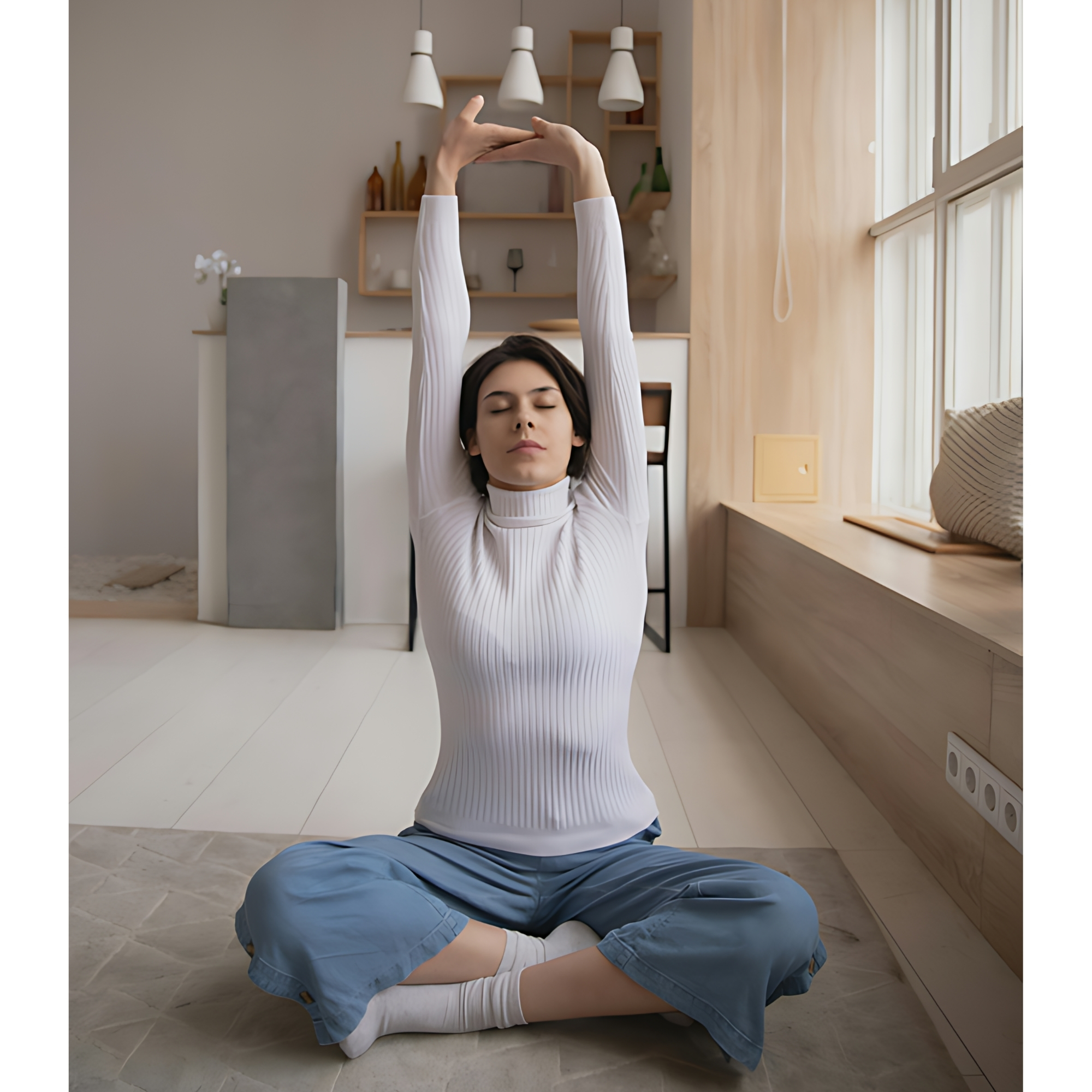
Parenting is a full-body workout, whether you’re lifting toddlers, bending for toys, or running endless errands. Over time, your back aches, your neck stiffens, and your body quietly begs for a stretch. I sometimes swear I can hear the hinges creak as I move.
Stretching isn’t just for athletes; it’s a lifeline for parents who give so much of themselves daily. With just a few mindful minutes, you can ease tension, boost your mood, and reconnect with your body.
Why Stretching Is Essential
Between sleepless nights, long workdays, and constant multitasking, our bodies carry more stress than we realize.
Here’s how stretching helps:
- Releases tension from the neck, shoulders, and lower back
- Improves posture (especially for those who sit long hours or carry children often)
- Boosts energy and circulation
- Supports better sleep by calming your nervous system
- Prevents injury and muscle stiffness
- Gives you a mindful pause; a few quiet moments just for you
Types of Stretching
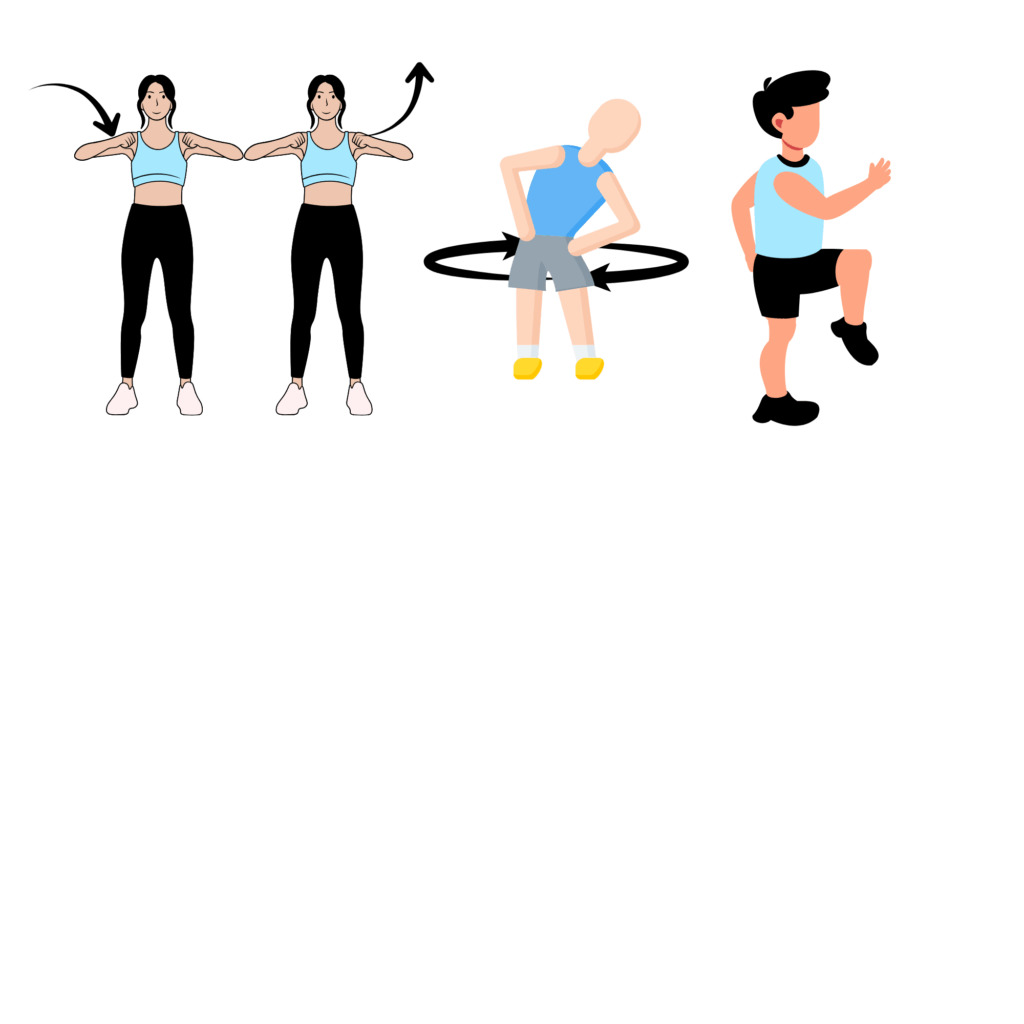
1. Dynamic Stretching (Before You Start Your Day)
Perfect for mornings or before chores to warm up your body.
Examples:
- Arm circles: Loosen tight shoulders.
- Hip circles: Ease tension from sitting or carrying kids.
- Marching in place with shoulder rolls: Get your blood flowing gently.
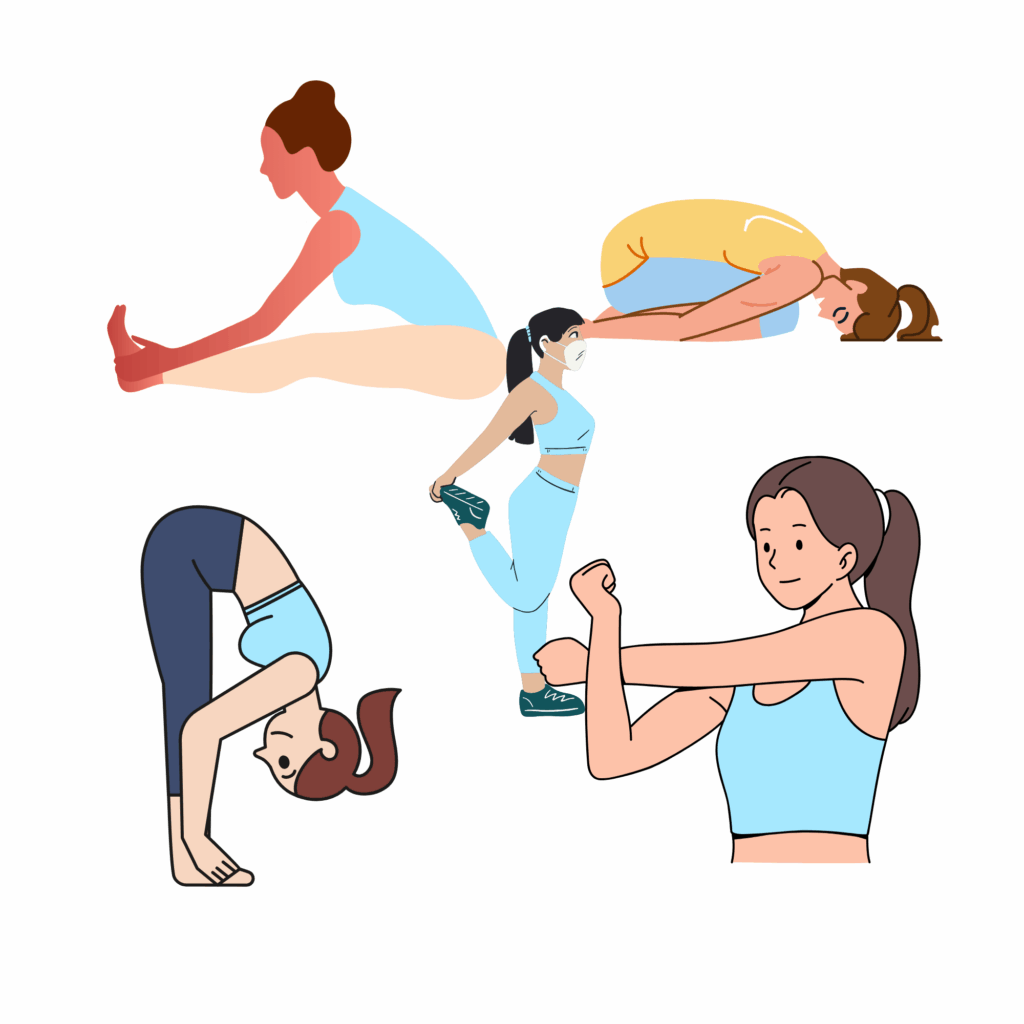
2. Static Stretching (After the Hustle)
Ideal after a long day, workout, or bedtime routine. Hold each stretch for 20–30 seconds.
Examples:
- Seated hamstring stretch: Sit with legs straight, reach for your toes.
- Child’s pose: Kneel, extend arms forward, and rest your head. It’s a hug for your spine.
- Standing quad stretch: Hold one foot behind you to stretch your thigh.
- Shoulder cross-body stretch: Pull one arm across your chest to release upper-body tension.
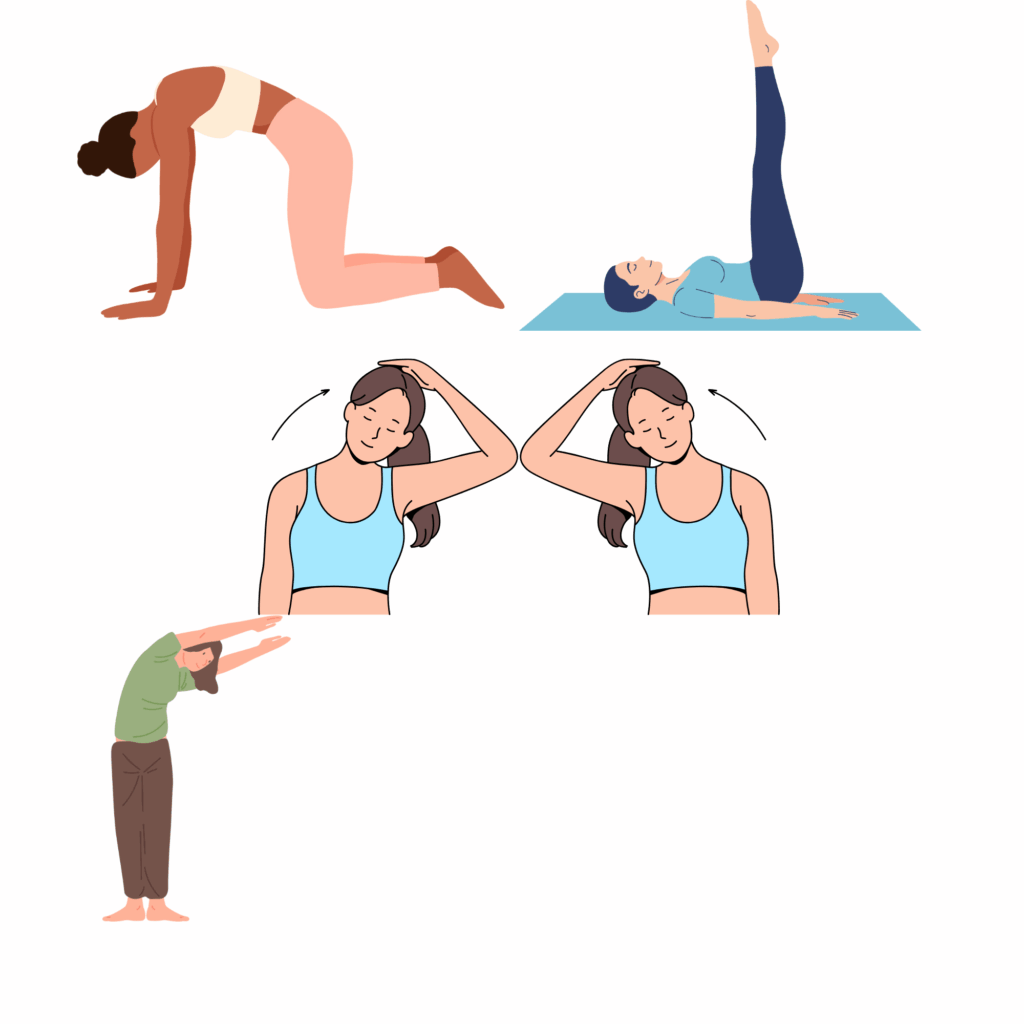
3. Restorative Stretching (For Relaxation or Before Bed)
These are slow, calming stretches that prepare your body for rest.
Examples:
- Cat-Cow pose: On all fours, arch and round your back slowly to release stress.
- Neck rolls: Gently roll side to side to release tension before sleep.
- Legs-up-the-wall pose: Lie on your back and rest your legs on a wall; perfect for tired legs and swollen feet.
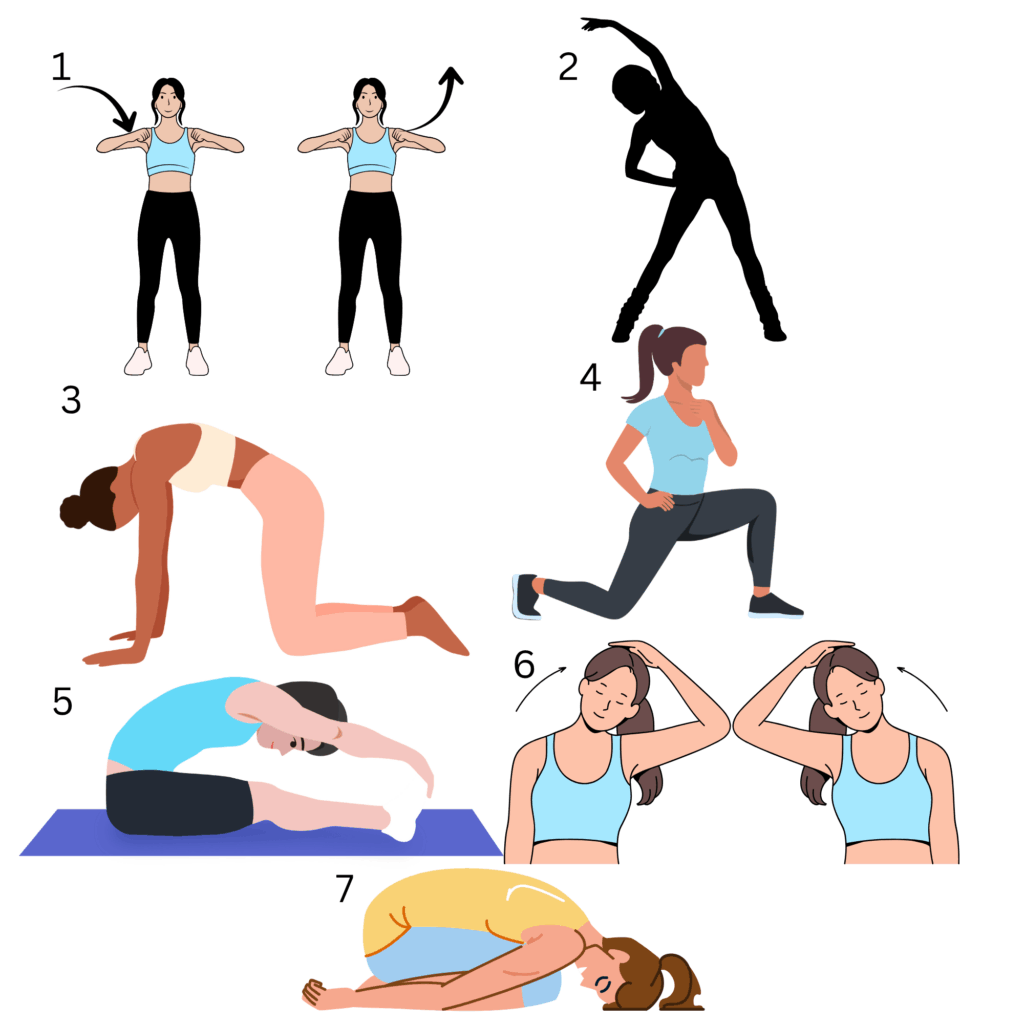
A 10-Minute “Reset” Stretch Routine
Use this anytime; morning, nap time, or after the kids go to bed.
- Shoulder Rolls-10 forward, 10 backward
- Side Reach Stretch- Lift one arm overhead, bend to the opposite side (30 sec each)
- Cat-Cow Pose- On all fours, alternate arching and rounding your spine. 1 minute of deep breathing
- Hip Flexor Stretch- Step one foot forward into a lunge, keep chest tall (30 sec each leg)
- Seated Forward Fold- Reach for your toes, let your head relax (1 min)
- Neck Stretch- Tilt your head gently from side to side (30 sec each)
- Child’s Pose- 1–2 minutes, deep breaths, let go of the day
Bonus: Play soothing music, light a candle, or stretch while your kids color or read beside you.
Tips for Making Stretching a Habit
- Pair it with daily tasks: Stretch after brushing your teeth, doing laundry, or before bedtime.
- Involve your kids: Turn it into a “family stretch time” or morning movement challenge.
- Focus on breathing: Inhale through your nose, exhale through your mouth, feel your body relax.
- Start small: 5 -10 minutes a day is enough to feel the difference.
- Stay consistent: Your body remembers what you practice daily.
Final Thoughts
Stretching isn’t a luxury; it’s an act of love for yourself.
It’s your body’s gentle reminder that you deserve care, too.
Whether it’s two minutes before the kids wake up or ten after bedtime, those small moments of movement can ease tension, restore calm, and help you show up stronger for your family and yourself.
So go ahead, roll those shoulders, take a deep breath, and stretch into who you’re meant to be.
/